October 1st, 2026 | Blog | Events & Industry Updates
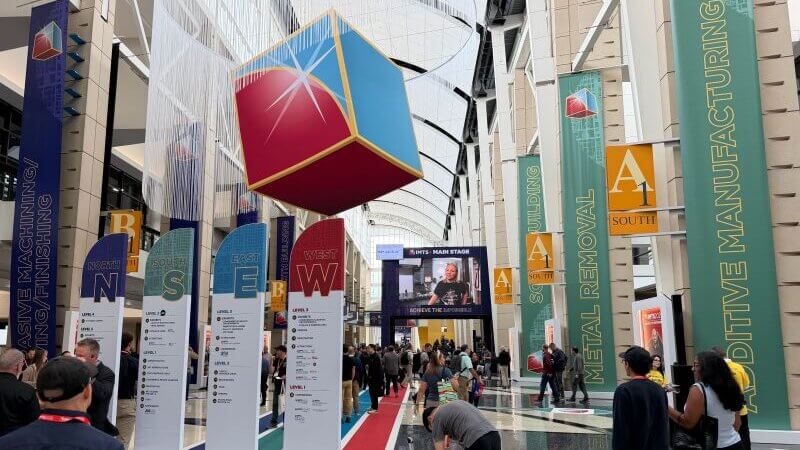
AI and robotics were hard to miss at IMTS in Chicago. An impressive demonstration can get your attention, but whether it’s worth the investment comes back to a question we found ourselves asking after the show: “Does it add to the bottom line?”
CEO Josh Liegel and Director of Marketing Jayden Steenbakkers got a firsthand look at new technologies designed to make manufacturing processes more efficient. When it comes to deciding where those technologies belong in your own operation, it’s important to be selective.
“Stay aware of the changes and developments, but be cautious in implementing.” – Josh Liegel, CEO
That starts with understanding what the technology would improve, how it would fit into your existing process, and what it would take to support it in your facility. Our time at IMTS brought the conversation back to five questions worth considering before making an investment.
One of the clearest takeaways from IMTS was that manufacturers aren’t necessarily finding new ways to solve familiar challenges.
“Vendors aren’t inventing new ways to solve manufacturing challenges. They’re introducing greater efficiencies.”
AI-powered visual inspection was one example that stood out. These systems can help manufacturers inspect parts for defects, verify weld or assembly quality, identify inconsistencies, and create inspection records as parts move through production. The potential for greater speed, consistency, and record-keeping makes this an interesting application of new technology.
One demonstration made that potential more tangible. A robot welded a nut and washer together, then automatically scanned the finished weld to verify its quality. The task itself was simple, but it showed how inspection could become part of the production process rather than relying on someone to separately monitor and check the work.
For manufacturers evaluating technology like this, the process itself is the place to start. Where is inspection creating a bottleneck? Where does quality control rely on repetitive manual work? Where could better documentation help identify problems or trace an issue through production? Inspection is one example, but the same questions can apply to whichever process you’re trying to improve.

How to apply this in your operation:
AI was everywhere at IMTS, and there was a noticeable difference between companies using it to add value and those using it mainly as a marketing talking point. When considering new technology, the criteria come back to the work itself and the bottom line.
That gives manufacturers two things to consider: how the technology improves the work and whether that improvement makes financial sense. Ask the supplier to explain the benefit for your application and what results support it. An AI feature should have a clear purpose and an outcome you can evaluate.
The purchase price is only part of that assessment. Installation, integration, training, maintenance, and ongoing support all contribute to the total cost of ownership and should be weighed against the value the technology is expected to deliver.
With the full cost in view, you can better evaluate whether the expected improvements are enough to justify the investment.

Working demonstrations made a difference in understanding the technology at IMTS.
“The booths that caught my attention the most were the ones that had their physical product there and in action.” – Jayden Steenbakkers, Director of Marketing
Exhibitors know the value of a live demonstration, especially when knowledgeable SMEs can help buyers understand how the technology could work in their operation and answer questions like:
That same level of detail should carry into the evaluation process. Ask the supplier to demonstrate or walk through a task your team actually needs to perform, using your process and requirements as the starting point. This gives your team a clearer picture of how the technology would fit into production, what may need to change, and what questions need to be answered before making an investment.
Seeing a technology perform in a demonstration is one part of evaluating what it can do. Bringing it into your own facility is another, and introduces a different set of considerations.
That means looking at the bigger picture around implementation, from how the technology will fit into existing equipment, systems, and workflows to what it will require from the people operating and supporting it. Training, safety, and ongoing maintenance should all be part of that consideration.
The facility itself matters too. New equipment may introduce different power, space, cooling, or environmental requirements, particularly when sensitive controls and electronics are involved. Data and security requirements should also be considered when systems collect, share, or connect to information across the operation.
A valuable addition to your manufacturing operation depends not only on what the technology is capable of, but whether your facility, systems, and team are ready to support it.
Despite the prominence of AI and robotics, we left IMTS thinking about the continued importance of people in manufacturing.
“The headlines say AI, but manufacturing doesn’t get done without skilled people to make it happen.”
Behind all of that technology, manufacturing still relies on people who know the processes, understand the equipment, and have the skills and experience to keep the work moving.
That experience also matters when evaluating new technology. Your operators, engineering, and maintenance teams can help assess how a new system would fit into daily production, including the service, training, and support it will require. Their involvement also helps establish who will take responsibility for the process once it’s in place.
New tools and AI can make manufacturing processes more efficient, but their success still depends on people who understand the work.
IMTS gave us a firsthand look at where manufacturing technology is heading and what those developments could mean on the shop floor. Deciding what belongs in your own operation comes down to the process you need to improve, the value the technology can deliver, and what it will take to implement and support it.
Follow Josh Liegel and Jayden Steenbakkers on LinkedIn for more perspectives on manufacturing technology, industry trends, and what EIC is seeing across the industry.


